© Vietato l'utilizzo dei contenuti senza autorizzazione
Molise
Campobasso Isernia
A small region, a treasure chest containing unexplored treasures. Starting from the coast, a natural continuation of the fascinating Costa dei Trabocchi. Going inland, you travel up and down through semi-deserted territories dotted here and there with villages where time has stopped. Campobasso and Isernia, the two provincial capitals, are small towns where life flows peacefully. Molise cuisine
is varied and satisfies both meat and fish lovers and even vegetarians. For those who love cheese, along the roads of Sannio and
Matese there are numerous dairies where you can stock up on caciocavalli, provole and scamorze. My favorite dishes are
Cavatelli allo Scoglio or with Spigatelli depending on whether I am on the coast or in the valleys of the interior. Brodetto di Pesce Termolese with sauce, ideal for mopping up the sauce with homemade bread. A good wine is Biferno Rosso.
Province of Campobasso
Area: 2926.34 Km² Population: 209,207 Municipalities: 84
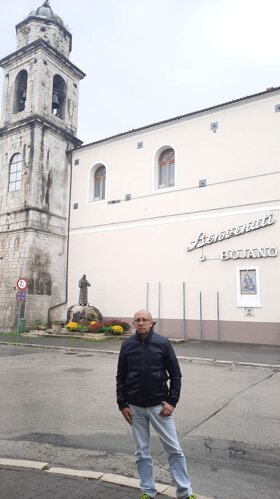
Bojano: Church of Santa Maria del Parco
Bojano: Church of Santa Maria del Parco
travel stories...
Campobasso
Montecilfone and surroundings
Termoli
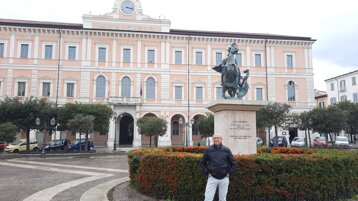
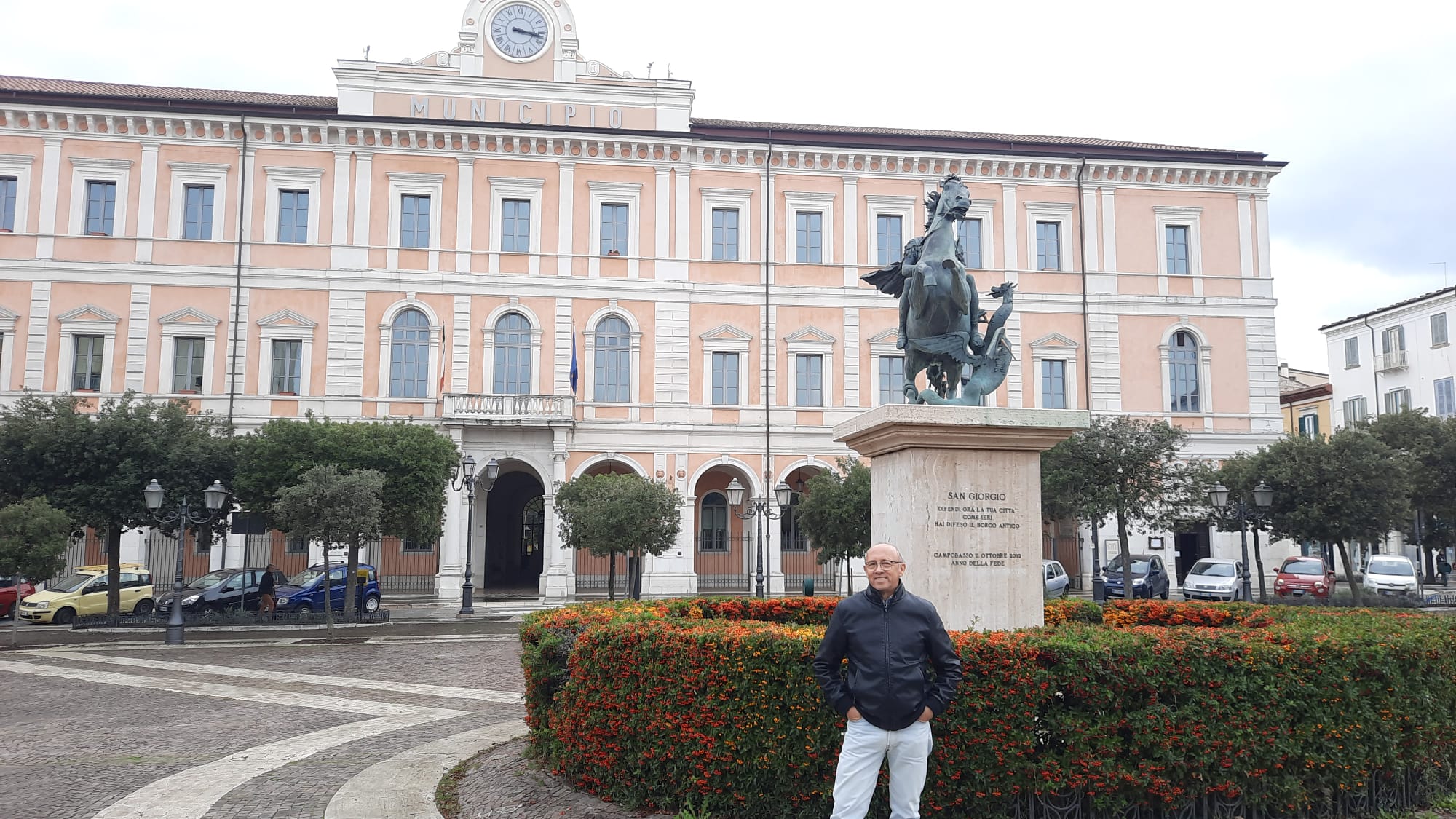
I arrived in the regional capital on a drizzly day. I park right in the center in front of the Municipal Library. A hundred meters and I am in Piazza Vittorio Emanuele II for a photo in front of the Monument to San Giorgio, the patron saint of Campobasso. I cross the road and enter the beautiful Palazzo San Giorgio, the seat of the Town Hall; I pass between the offices on the ground floor and exit from the back and find myself immersed in the Gardens of Villa Musenga, also known as Villa dei Cannoni. I continue south and reach the Alessandro di Lisio Garden where, in addition to the Monument to the Fallen, there is an area that commemorates the Parà della Folgore killed in Afghanistan. I get back in the car to reach the hill where Castello Monforte stands, a quadrangular fortress with a tower that today houses a Weather Station; I only visit it from the outside but that is enough to perceive its grandeur; from up here you can dominate the whole city. A
last stop in an elegant bar in the center for a ginseng coffee,
accompanied by the classic glass of water and then off for new
explorations.
Arriving late afternoon in mid-November after eight hours of driving I reach
the hotel I had booked a hundred meters from the large sandy beach
of the Costa dei Trabocchi. A fish dinner with cavatelli allo scoglio and
then an exploratory stroll; it is Sunday, and in the evening the
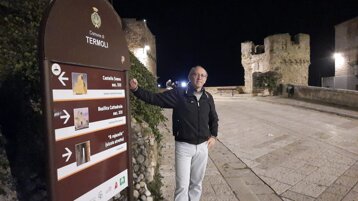
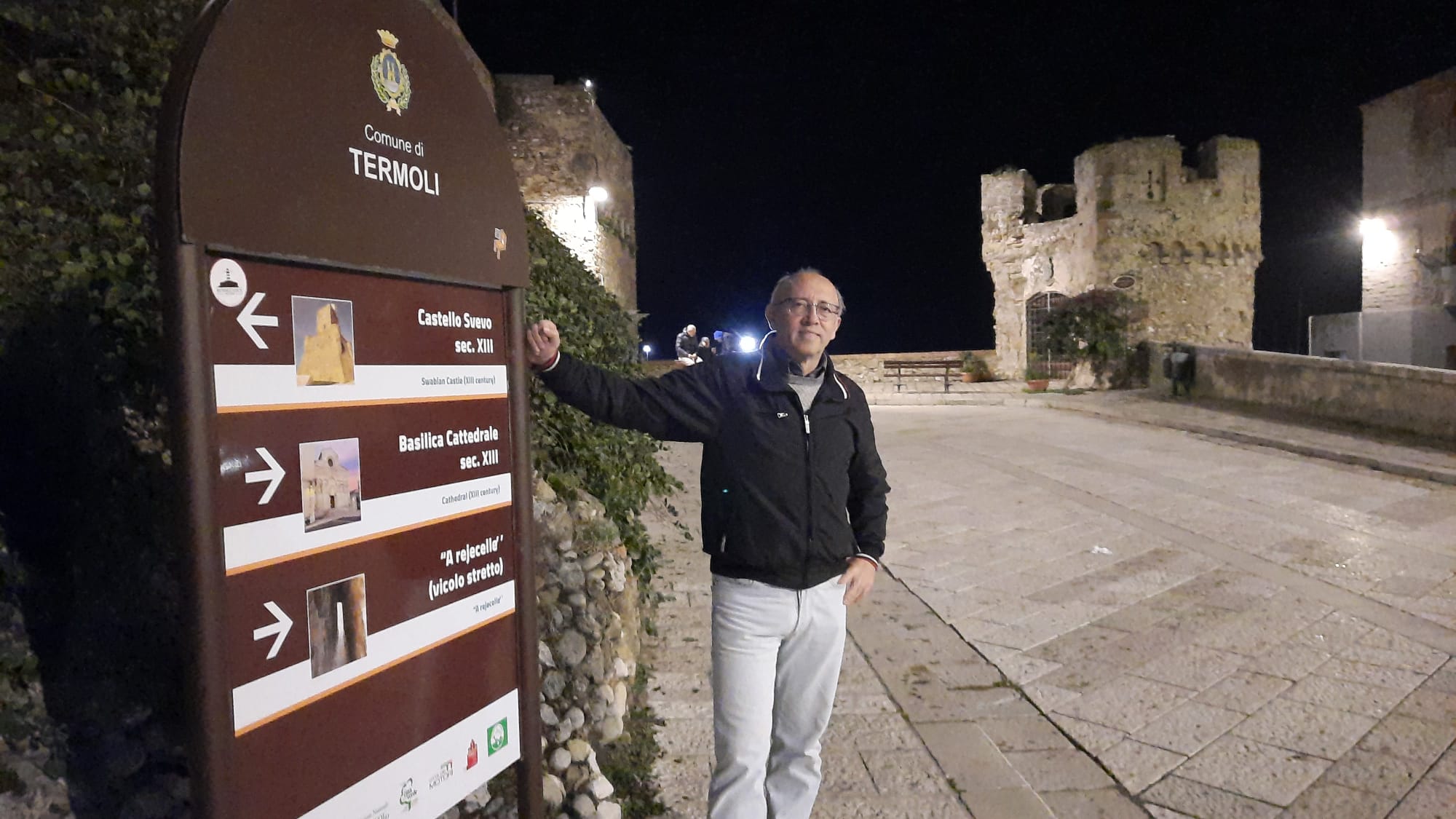
main avenue of this town is bustling with people going back and back along the open shops. I walk along Corso Nazionale which ends in front of the Castello Svevo, a fortress built in the Norman era but renovated as we see it today by Frederick II of Swabia; after passing the high walls of the ancient village I wander through the narrow streets of the historic center until I reach the Cathedral of Santa Maria della Purificazione.
The next day I visit the old part of the city in the sunlight, starting from the Torre del Belvedere until I pass through Rejecelle, the narrowest alley in Italy (just over 30 centimeters).
On the last evening I walk through the lit streets that surround the port from where ferries leave for the Tremiti Islands, and I breathe in the smell of the sea.
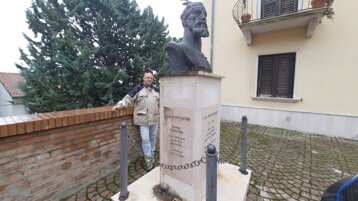
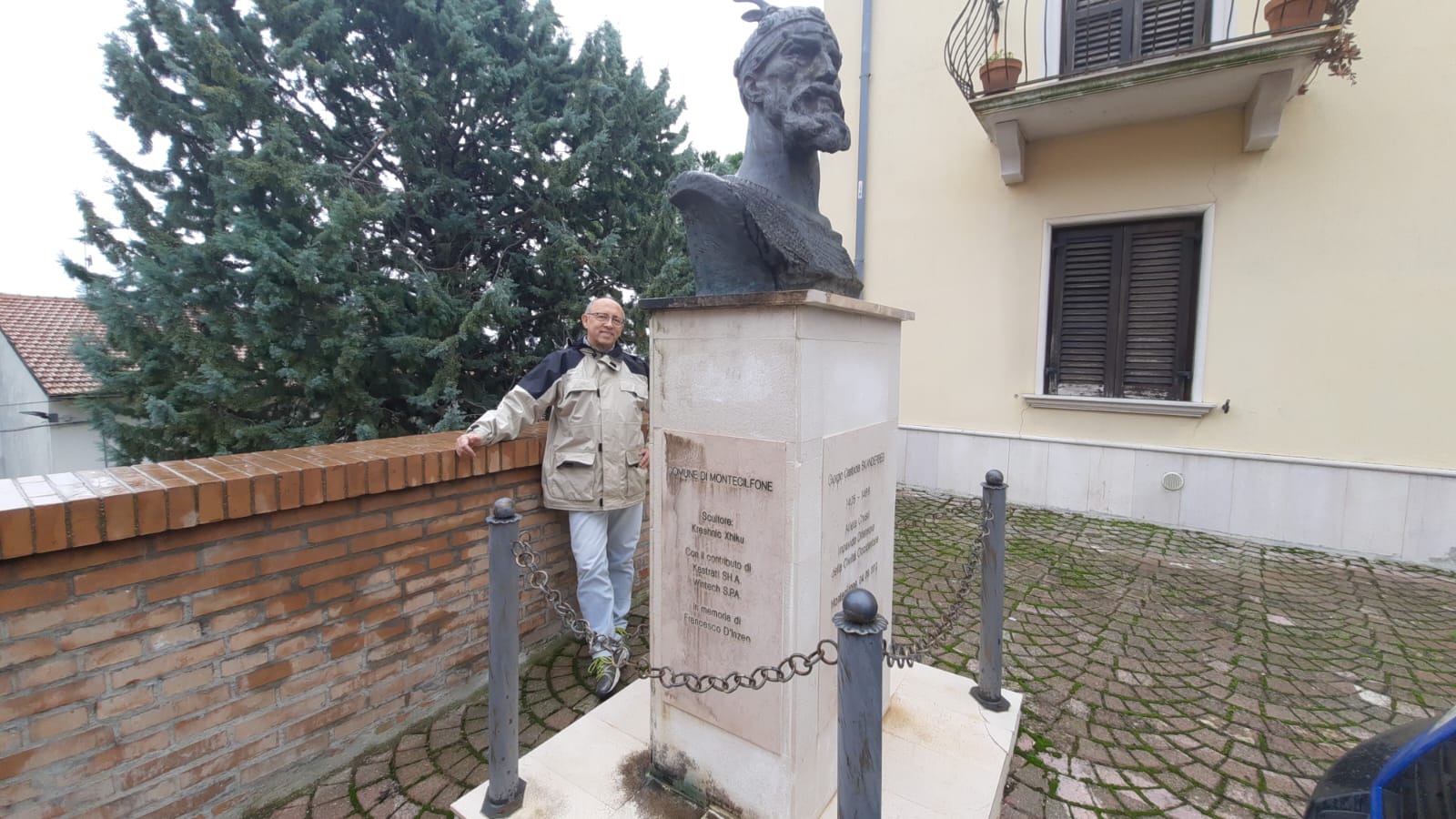
It is pleasant to drive along the ups and downs of the road that leads from Termoli to Campobasso; few cars and for miles, around me only the slopes of the hills with the colors of autumn. On the edge of the road I see a little dog abandoned in the rain. I stop the car; the puppy is sitting there, dejected and skinny, waiting for help. I approach him but he is scared and moves away; so I put everything edible I have on the ground: crackers, brioches and biscuits, and good luck, my friend... I slowly go up the interior of this region and after half an hour I enter the town of Montecifone. The entrance to the town is uphill as always in these parts. I park the car to walk along the ancient cobblestone streets to a small square where there is a monument to the Albanian leader Giorgio Castriota Skanderbeg whose bronze bust is the pride of the local community. A short visit to the Church of San Giorgio of ancient Greek-Byzantine rite, and it is already time to leave this beautiful village of Basso Biferno surrounded by olive groves and the oaks of the Bosco di Corundoli.
Province of Isernia
Area: 1533.46 km² Population: 78,759 Municipalities: 51
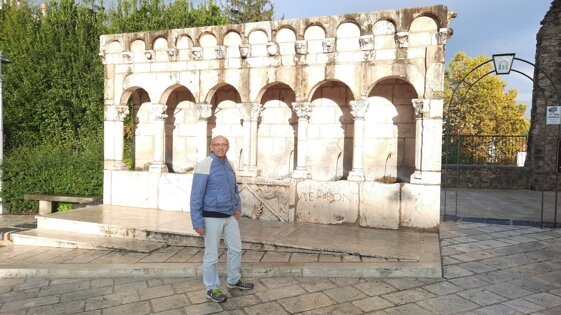
Isernia: Fraternal Fountain
Isernia: Fraternal Fountain
travel stories...
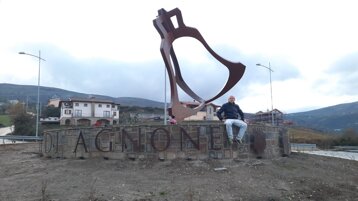
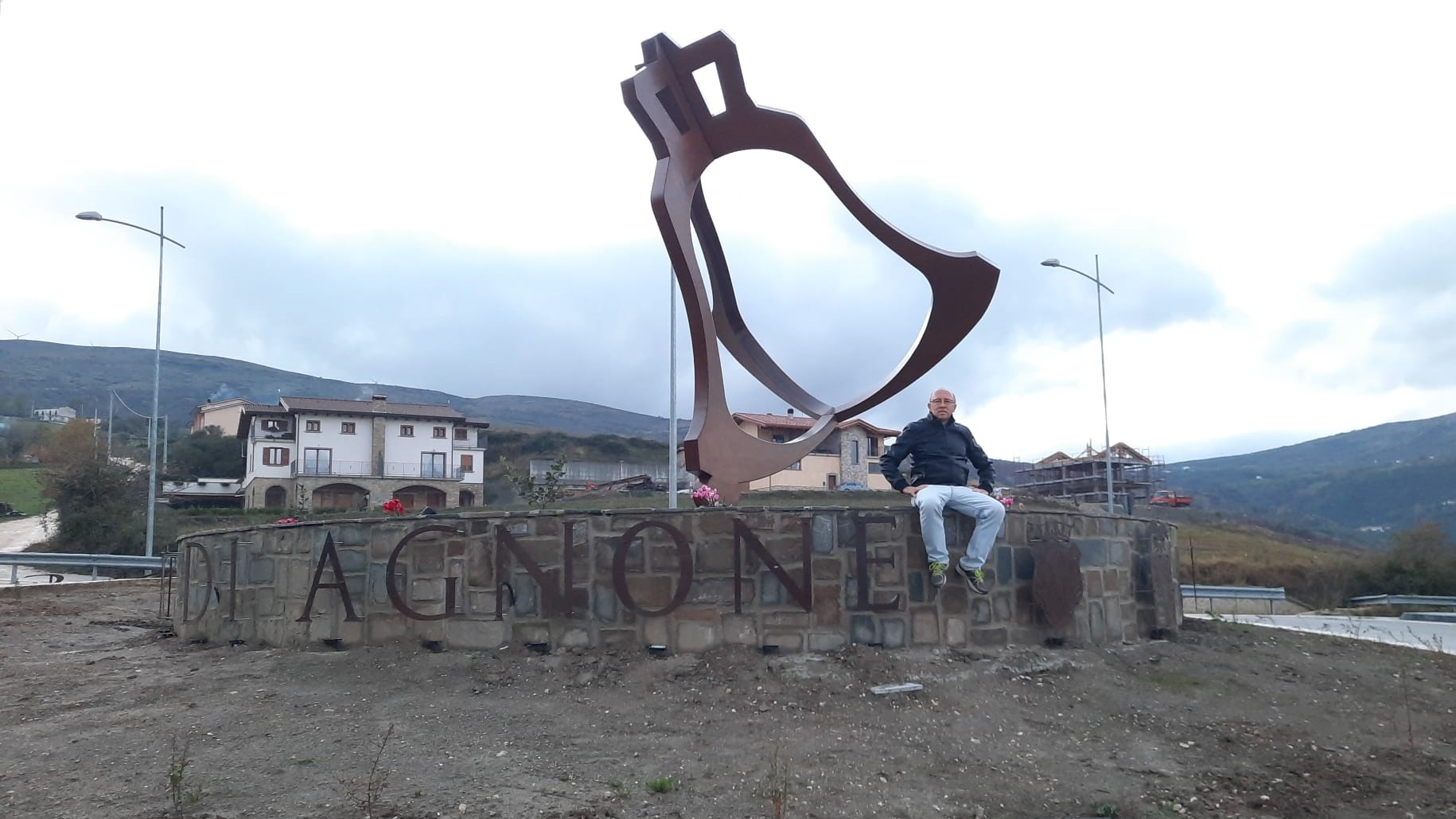
Agnone
Isernia
Pettoranello del Molise
Wandering up and down the
Matese I came across this ancient village today twinned with the
American city of Princeton where many emigrants from here live.
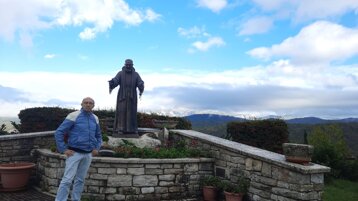
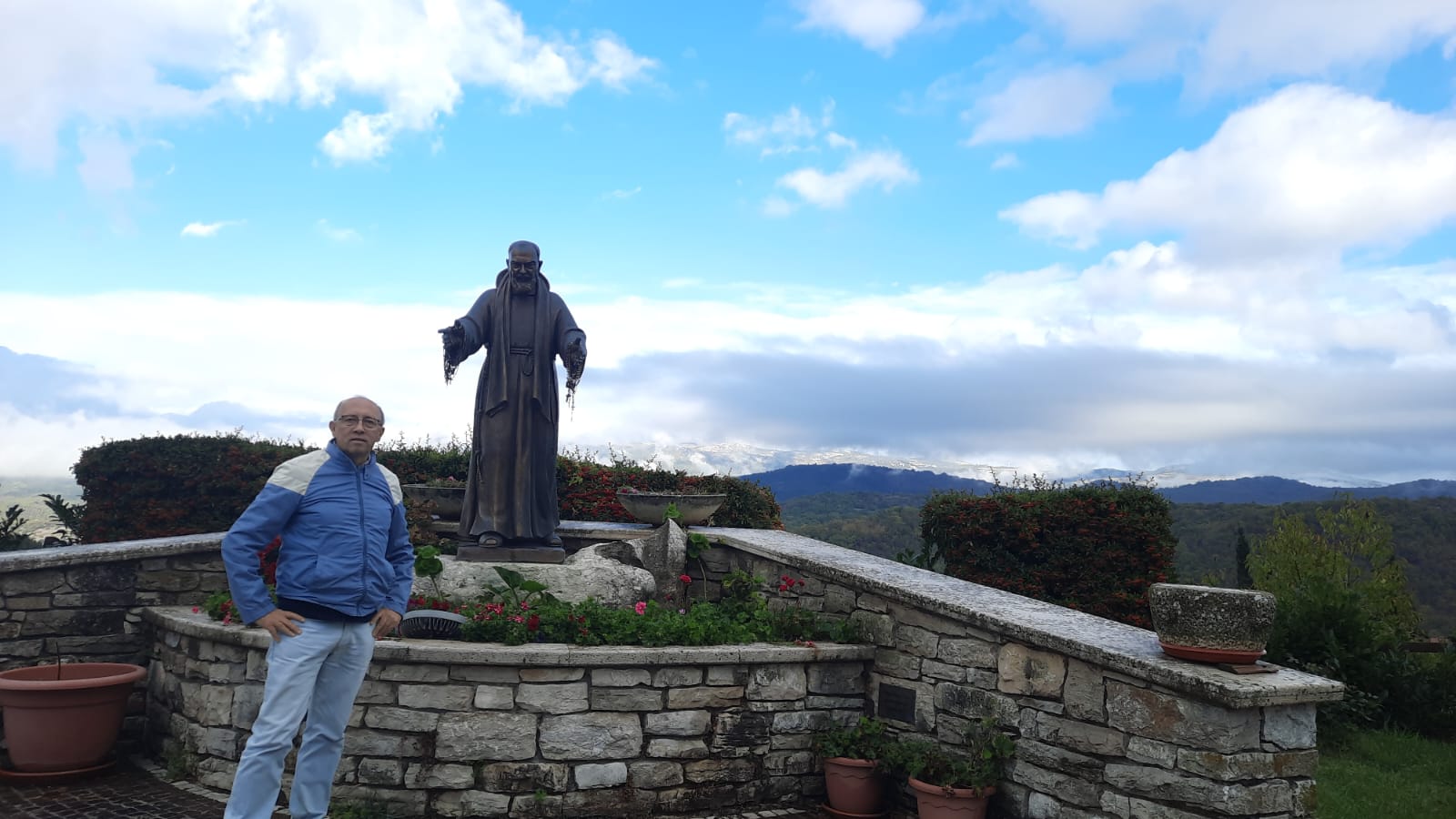
At the entrance to the town there is a large statue of San Pio da
Pietralcina. It is right to leave the car to slowly climb
the porphyry road and admire the Sannio valley from above;
a few minutes and I arrived in the main square, the center of
town life, at the top of which is the Church of Santa
Maria Assunta in Cielo, a large religious building from the
19th century with a neoclassical facade. I continue further up to the beautiful
Baronial Palace, an ancient fortress from the medieval era,
renovated over time and now a private residence. I then begin to
go back down the narrow alleys, observed by the faces of these
descendants of the Samnites and I breathe in the atmosphere of tranquility that
reigns here. If you had time and legs, you could also visit the
mysterious Castello delle Riporse, now little more than a ruin
located in a pleasant location several kilometers away; but that's
another story.
In the surroundings of this town
there are several dairies that sell their products at retail; in
one of these I stopped and came out with caciocavallo,
scamorze, provoloni. This village, famous throughout the world for the
production of bells, is full of churches, each more beautiful
than the other. My favorite is the Mother Church of San Marco
Evangelista with the unique detail of the bell tower in front of the
facade. Also interesting is the Romanesque Church of Sant’Antonio
Abate with a magnificent altar from 1700. The best thing to do is
wander through the alleys of the historic center, and admire the magnificent
friezes on the portals of the houses. Also worth mentioning is the Bell Museum
Marinelli, an ancient foundry dating back to a millennium, and which
thanks to Pope Pius XI, has also used the
Pontifical Coat of Arms since 1924. It is getting dark and I reluctantly leave this corner of upper
Molise to return to the coast; above me a romantic starry sky that lights up the entire Verrino Valley.
Coming from the state road
Venafrana I enter Isernia in Contrada Santo Spirito, and in the middle
of the roundabout, I can’t help but notice the monument to the Prehistoric Elephant; one of the symbols of the so-called Paleolithic City. A sleepy provincial town with all the advantages that this entails; starting with the ease of finding
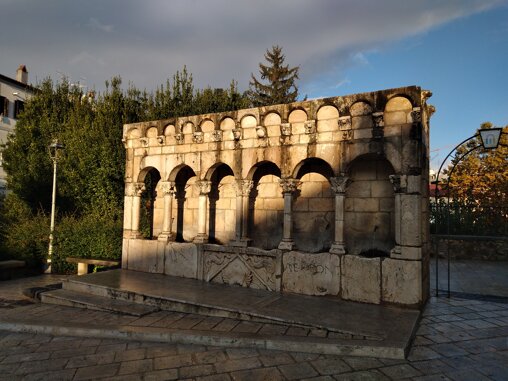
free parking near the historic center. Walking along the ancient walls I arrive in a few minutes in Piazza Celestino V, the heart of the nightlife. On one side I notice a large gazebo of ancient iron, with some mosaics on the sides, which serves as a Music Stage. On the opposite side is the most beautiful monument in Isernia: the wonderful Fontana Fraterna,
composed of arches and columns of limestone, decorated marble and six
spouts from which to quench your thirst on summer days. To the left
of the fountain are the Church of the Concezione and the adjacent Civic
Museum of the Memory of History; on the right, a little hidden by the
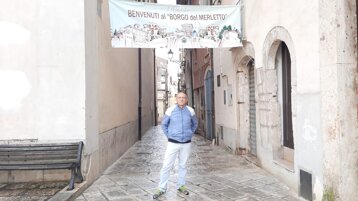
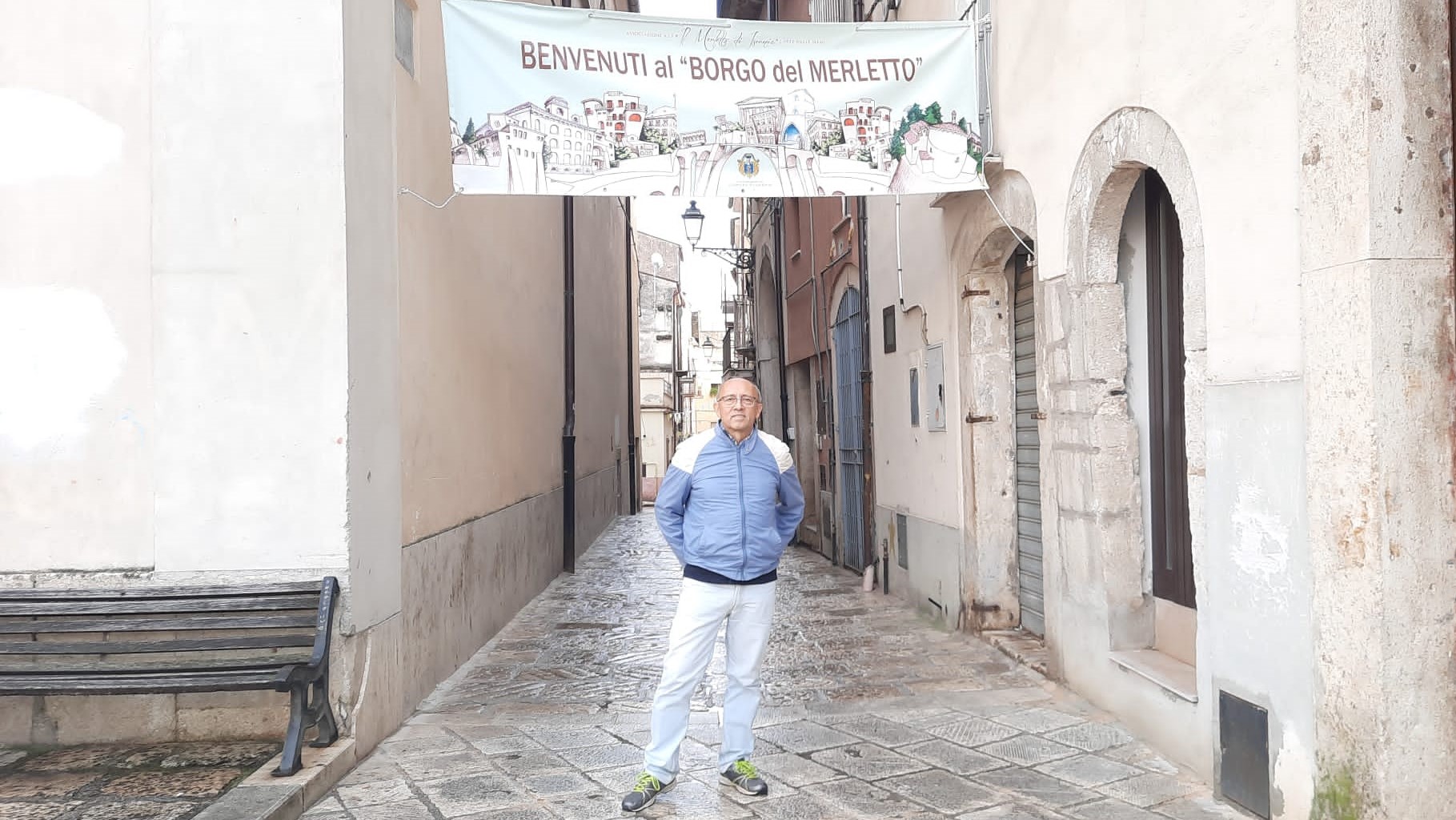
vegetation is the statue of Pope Peter Celestine V. I continue along the pleasant historic center, first visiting the "Borgo del Merletto"; then passing in front of the Church of Santa Chiara, and
finally visiting the Cathedral with its beautiful neoclassical facade, I end
this relaxing visit in front of Palazzo San Francesco, built in the 13th century as a convent and now the town hall.